What is an eddy current separator and how does it work?
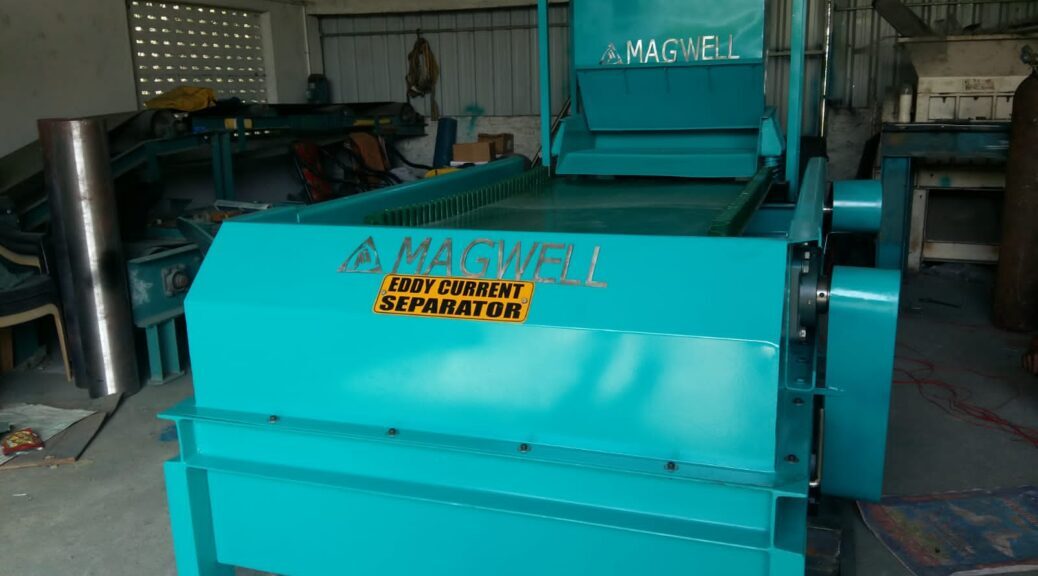
An eddy current separator is an advanced piece of metal recovery equipment designed to separate non-ferrous metals from non-magnetic materials. Recycling plants and bulk material handling lines rely on these machines to sort materials like aluminum, copper, and brass out of mixed waste streams, powders, granules, and bulk solids. Unlike standard magnets that attract iron and steel, an eddy current separator uses dynamic magnetic forces to push non-ferrous metals away from the rest of the product stream.
The core operating mechanism relies on a high-speed magnetic rotor placed inside a non-metallic drum. As material moves along a belt conveyor and passes over the spinning rotor, the rapidly changing magnetic field creates electric currents—known as eddy currents—inside the conductive non-ferrous metal pieces. These eddy currents generate their own temporary magnetic field that opposes the field of the rotating magnetic rotor. This strong repulsive force propels the non-ferrous metals off the belt into a separate discharge chute, while non-conductive materials like plastic, glass, and wood simply fall off the end of the conveyor naturally.
For processing facilities looking to improve metal recovery rates, choosing the right separation equipment is essential. Magwell Industries designs custom eddy current separators tailored to match specific belt speeds, material feed rates, and plant layouts, ensuring high separation yield and consistent product purity.
Where are eddy current separators used in industrial recycling?
Modern industrial recycling relies heavily on automated sorting to process high volumes of waste efficiently. Eddy current separation equipment is used across many different industrial lines where non-ferrous metals must be recovered or removed to protect downstream machinery and clean up recycled products.
- Plastic and PET Bottle Recycling: Removing non-ferrous metallic contaminants such as aluminum caps, rings, and foil seals from crushed plastic bottles or flakes before further washing and melting.
- Bulk Material Handling and Scrap Processing: Isolating valuable aluminum and copper from mixed municipal solid waste, electronic waste, shredded auto scrap, and construction material streams.
- Foundry and Metal Casting Operations: Sorting non-ferrous metals from foundry sand, slag, and metal processing residues to reclaim reusable materials.
- Glass and Wood Recycling: Extracting metal fasteners, aluminum trim, and copper components from crushed glass cullet and shredded wood waste.
By effectively removing non-ferrous metals from raw streams, processing plants prevent damage to heavy machinery like granulators and double shaft shredders, while creating clean, high-value recycled outputs.
Why are eddy current rotors critical for non-ferrous metal recovery?
The internal eddy current rotor is the heart of any eddy current separator. The performance, depth, and intensity of the repulsive magnetic force depend directly on the design and build quality of this spinning magnetic core.
A high-performance eddy current rotor spins at high speeds inside a protective shell. It generates powerful, rapidly alternating magnetic poles that induce strong currents in even tiny non-ferrous metal particles. If an eddy current rotor lacks sufficient field intensity or balance, smaller metal pieces will fail to jump off the belt, reducing overall separation efficiency and allowing valuable metals to end up in the waste stream.
Magwell Industries manufactures standalone high-speed eddy current rotors as well as complete separation units. Built with high-intensity rare-earth magnets, these custom-engineered rotors deliver deep magnetic penetration, low vibration, and long service life under heavy-duty operational conditions. To learn more about selecting units for your processing plant, explore our guide on enhancing metal separation efficiency with eddy current separators.
How do eddy current separators integrate into PET bottle recycling plants?
In turn-key PET bottle recycling plants, maintaining high purity in final plastic flakes is critical for meeting industrial quality standards. Used bottles often carry metal ring seals, foil labels, and aluminum caps that spoil the purity of recycled plastic if not removed before extrusion.
Magwell Industries designs, manufactures, and exports complete turn-key PET bottle recycling systems engineered for continuous operation. In these wash line setups, material flows through a clear, multi-stage process:
- Material Feeding: A continuous belt conveyor delivers unsorted plastic bottles directly into a heavy-duty double shaft shredder.
- Shredding and Transport: The double shaft shredder reduces whole bottles into smaller pieces, which are transported smoothly along a heavy-duty screw conveyor.
- Metal Extraction: As shredded material moves along the line, primary magnetic separators eliminate ferrous iron contamination, followed by an eddy current separator that rejects non-ferrous metals like aluminum caps and foil pieces.
- Washing and Dewatering: Cleaned plastic flakes travel into a hot floating washer to scrub off adhesives and dirt, before entering a dirty draining screw and final dewatering equipment.
Integrating robust magnetic separation directly into the wash line design ensures higher flake quality, reduces wear on shredding knives, and maximizes profitability for plastic recycling operations.
What factors determine the right magnetic separation equipment for your plant?
Selecting the correct magnetic separation setup requires evaluating material characteristics, process flow rates, and contamination levels. No single piece of magnetic equipment handles every separation task, so matching equipment to the specific material stage is key.
1. Type of Metal Contamination
Ferrous iron particles respond to conventional magnets like permanent suspension magnets, high-intensity rare-earth magnetic rods, or wet drum magnetic separators. In contrast, non-ferrous conductive metals like copper and aluminum require an eddy current separator to generate repulsive force.
2. Material State and Particle Size
Bulk solids, free-flowing powders, granules, and liquid streams each demand tailored enclosures. Fine liquids and dry powders often pass through round or square stainless steel liquid-tight magnetic rods or hand magnetic testing rods during sampling. Bulk materials on belts require overhead suspension magnets, trommel screens, or custom vibrating feeders for steady feeding.
3. Field Strength and Verification
High-intensity rare-earth magnets attract fine weak magnetic particles. Quality control teams can verify magnetic surface strength using a digital DC gauss meter, ensuring that magnetic equipment performs at specified magnetic strength limits over time.
4. Material Handling and Flow Control
Consistent material presentation on the conveyor belt is essential for peak separation. Pairing separators with customized vibrating equipment, such as vibrating feeders, bin vibrators, vibrating grizzly feeders, or heavy-duty vibrating tables, helps spread material into a thin, single layer across the belt width for maximum magnetic exposure.
Why choose custom-designed magnetic equipment from Magwell Industries?
With over 12 years of technical engineering experience, Magwell Industries is a leading South India-based manufacturer and exporter of custom-designed magnetic separation equipment, vibrating machinery, and complete recycling systems. Operating with the tagline “Good quality made with Guarantee Analysis,” the company focuses on custom engineering tailored to each customer’s plant layout and production needs.
Magwell Industries houses complete in-house design and development facilities in Tamil Nadu, strategic to serving both Indian and international foreign markets. Whether you need single components like high-intensity rare-earth magnetic rods, hand magnets, magnetic sheet separators, magnetic lifters, or heavy-duty machinery like gyratory screen separators, horizontal vibrating screens, trommel screens, and vibratory furnace charging units, Magwell builds durable solutions engineered for high yield and maximum return on investment.
Every turn-key system—including complete PET recycling wash lines—comes with total design layout drawings and technical support. To discuss customized magnetic separation equipment or request project layout details, visit our enquiry page to connect directly with our engineering team.
###FAQS###
Q: What types of non-ferrous metals can an eddy current separator separate?
A: An eddy current separator separates conductive non-ferrous metals such as aluminum, copper, brass, bronze, and zinc from non-conductive waste materials like plastic flakes, glass cullet, shredded wood, and bulk solids.
Q: Does Magwell Industries supply both complete eddy current separators and standalone eddy current rotors?
A: Yes, Magwell Industries manufactures and supplies complete turn-key eddy current separator systems as well as high-speed standalone eddy current rotors built with high-intensity rare-earth magnets for custom machine integration or plant upgrades.
Q: How does an eddy current separator differ from a standard magnetic separator?
A: A standard magnetic separator uses static magnetic force to attract and hold ferrous (iron and steel) metals. An eddy current separator uses a high-speed rotating magnetic field to induce electric currents in non-ferrous conductive metals, physically repelling them off the belt into a separate collection area.
Q: Can eddy current separation equipment be customized for specific plant layouts?
A: Yes, Magwell Industries custom-engineers magnetic separation equipment, belt conveyors, and vibrating feeders to match specific plant dimensions, material throughput requirements, and existing recycling production lines.
Q: What other equipment works alongside eddy current separators in recycling plants?
A: In recycling plants, eddy current separators work alongside primary magnetic rods, suspension magnets, wet drum magnetic separators, vibrating feeders, double shaft shredders, screw conveyors, hot floating washers, trommel screens, and gyratory screen separators.###TITLE###
Understanding Eddy Current Separators for Industrial Recycling###META_TITLE###
Eddy Current Separators for Non-Ferrous Recycling###META_DESCRIPTION###
Learn how custom eddy current separators and rotors from Magwell Industries isolate non-ferrous metals to boost recycling yield and efficiency.###DIGEST###
This post explains how custom-engineered eddy current separators and magnetic rotors isolate non-ferrous metals like aluminum and copper in industrial recycling plants and bulk material handling lines. It covers the core working principles of eddy current separation, highlighting how dynamic magnetic fields repel conductive metals from non-conductive product streams. The article details key applications across scrap processing, glass cullet cleaning, and PET bottle recycling plants—where eddy current units extract metal caps and seals from shredded plastic flakes. It outlines critical selection factors including material type, feed presentation, magnetic strength measurement, and vibrating material handling equipment. Finally, it highlights Magwell Industries’ 12+ years of engineering experience as a South India-based manufacturer offering turn-key PET recycling systems, custom magnetic rotors, and specialized vibrating machinery.###QUICK_ANSWERS###
– Eddy current separators use high-speed rotating magnetic fields to repel non-ferrous metals like aluminum and copper away from non-metallic streams.
– Key applications include PET bottle recycling, scrap processing, foundry sand cleaning, and glass recycling.
– Magwell Industries manufactures both complete eddy current separation units and standalone high-intensity eddy current rotors.
– Proper separation relies on consistent feed presentation using vibrating feeders, screens, and complementary ferrous magnetic equipment.
– Turn-key PET wash lines integrate shredders, screw conveyors, magnetic separators, and floating washers to produce pure plastic flakes.###KEY_TAKEAWAYS###
– Eddy current separators create repulsive forces that isolate conductive non-ferrous metals from non-conductive plastics, wood, and glass.
– High-speed magnetic rotors built with rare-earth magnets are the critical component driving high recovery yields.
– Integrating eddy current separation in PET bottle recycling plants extracts aluminum caps and foil seals before washing.
– Factors like particle size, belt speed, material flow, and magnetic strength determine optimal equipment selection.
– Magwell Industries delivers custom-engineered magnetic separation and vibrating equipment backed by 12+ years of technical experience.###EXCERPT###
Learn how custom-engineered eddy current separators and high-speed magnetic rotors isolate non-ferrous metals in industrial recycling lines to improve product purity and operational yield.###SLUG###
understanding-eddy-current-separators-industrial-non-ferrous-recycling###EXTERNAL_LINKS###
Looking for reliable magnetic separation or a custom turn-key recycling system? Contact Magwell Industries today at sales@magwellindustries.com or submit an inquiry at https://www.magwellindustries.com/enquiry/ to consult with our engineering team!###IMAGE_ALT###
Magwell Industries industrial eddy current separator designed for non-ferrous metal recovery in recycling lines